By Ritu Goel, MD, DFAACAP | April 26, 2026 | Blogs | 0 comments
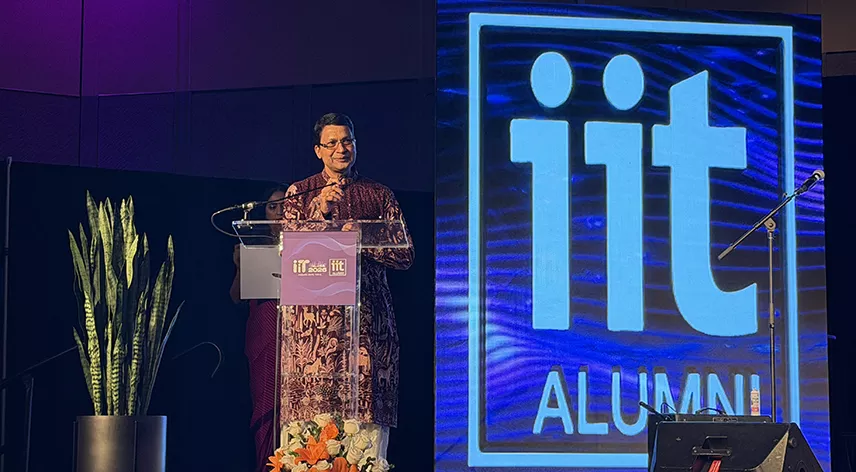
This conference taught me something I did not expect to learn at a gathering of innovators. To truly innovate and thrive, we must first commit to becoming the best human beings we can be. And this is not a poetic idea. It is a daily practice.
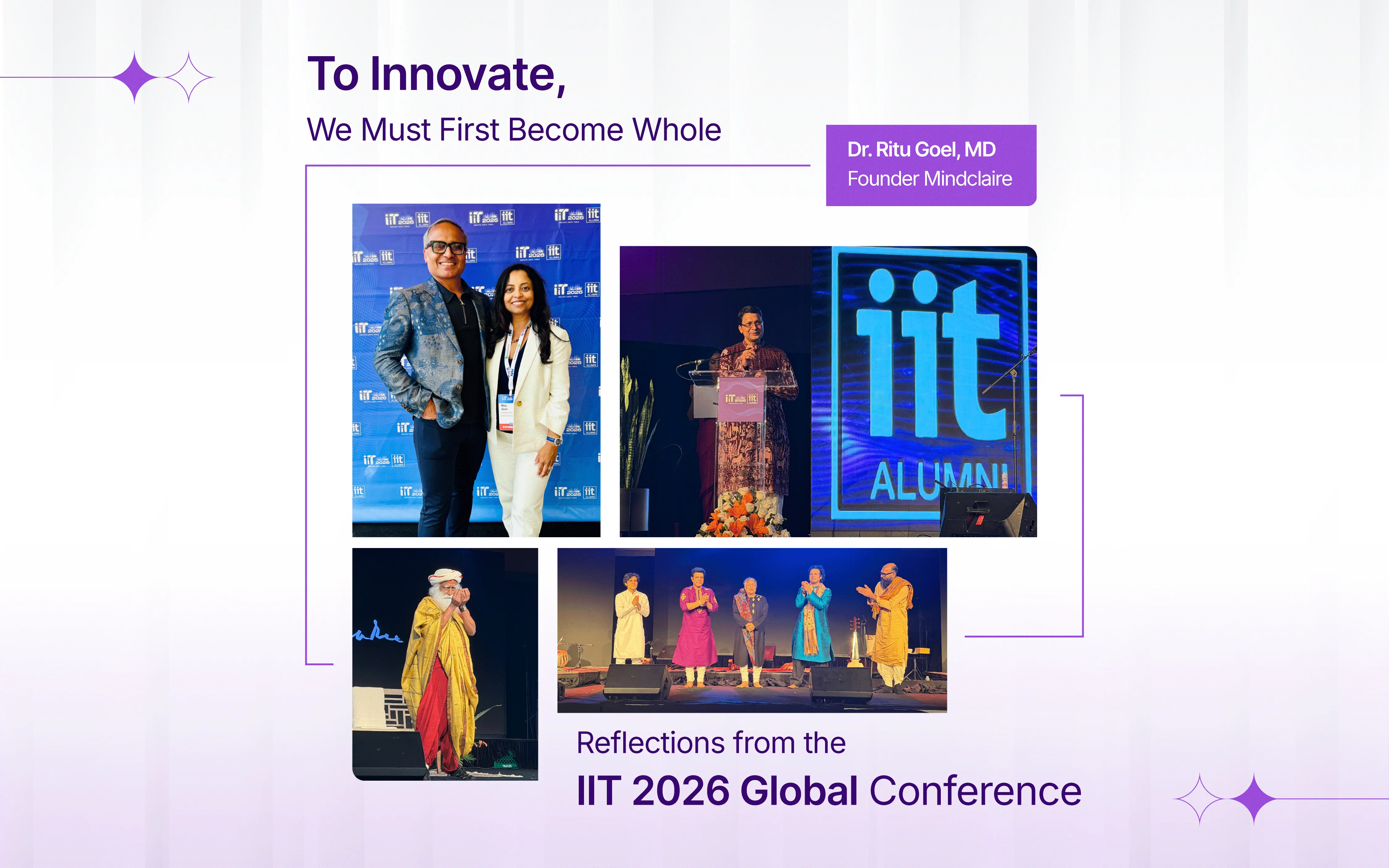
The IIT 2026 Global Conference had the theme “Innovate. Ignite. Thrive.” By the end of three days, I no longer read those words as a sequence. I read them as a dependency. Nothing we ignite will last, and nothing we thrive in will be sustainable, unless the human being doing the building is whole.
That message reached me through multiple voices. A mystic on a keynote stage. A maestro on stage with his sons. And a fellow founder, in a quiet hallway, was answering a question she had not expected. They were not in conversation with each other, but they were saying the same thing. And beneath them, holding the entire conference together, was a fourth voice. The voice of the people who built this experience for the rest of us.
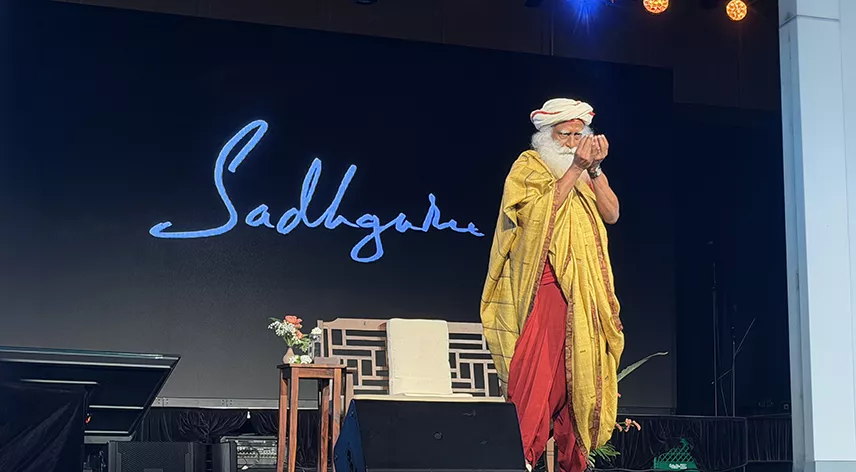
Sadhguru's keynote was the moment the room shifted. The conference had been alive with conversations about agentic AI, systems that act and solve full problems on their own. The energy was electric. Then he gently turned the conversation inward.
His message was about inner engineering. About the urgent need for human beings to master their inner state before machines master the external world. The machines are coming, he said, and they will move ahead of us. The only edge we have left, the only thing technology cannot replicate, is what we do within ourselves.
"A human being is the greatest and most sophisticated technology on this planet. We get very excited about the technologies we build outside, but we have not paid nearly enough attention to this one." Sadhguru, IIT 2026 Keynote
He spoke about identity and how the same knowledge can produce completely different outcomes for two people, depending on how each sees themselves. Hold a small identity, and your knowledge eventually turns against you. Hold a boundless one, and your power cannot work against another human being. We have shrunk our sense of self, and we are paying for it. In loneliness. In anxiety. In a mental health crisis that has stopped hiding. One in three teenage girls in America has experienced depression. One in two Americans report feeling lonely. His point was not despair. It was that this is solvable, but only when we begin to take inner life as seriously as we take everything else.
As a physician, I see those numbers as anything but abstractions. They are the patients I see, the families I treat, and the silent epidemic beneath everything we celebrate as progress. We are building extraordinary external technology while the human beings using it are quietly falling apart. Inner engineering is not a spiritual luxury. It is a survival skill. And in the age of AI, it is the foundation of everything else.
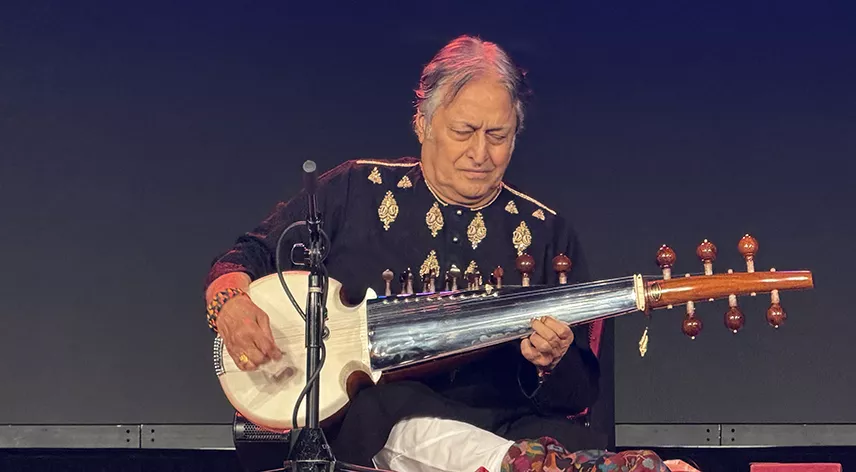
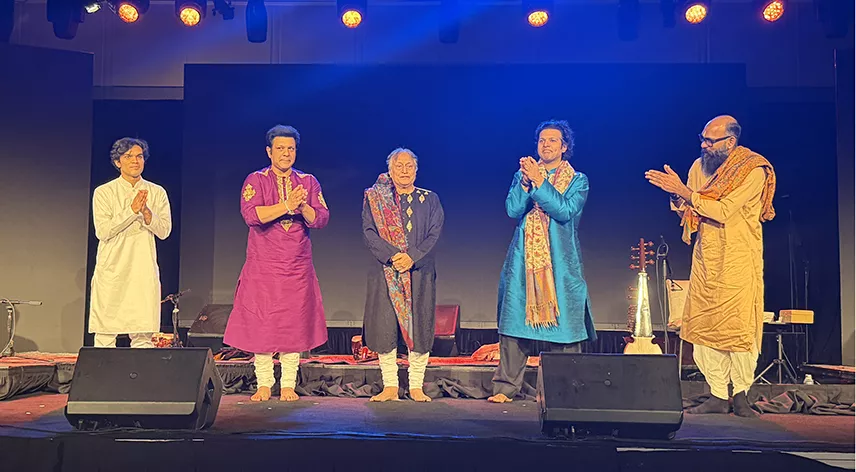
If Sadhguru gave the conference its message, Ustad Amjad Ali Khan gave it its soul. He performed in the evening, first solo, then with his two sons. He is the sixth generation of his family to play the sarod. His grandchildren, the eighth generation, recently performed in London, and his pride was unmistakable. Centuries of music passed hand to hand, like a flame that refuses to go out.
And then there was the moment that has stayed with me more than any other from the entire conference.
The sarod is played with the nails, not the fingertips. The shape and edge of the nail is what draws the finest sound from the strings. And there he was on stage, decades into his legendary career, pausing between pieces to file his nails. Not before the performance. During it. Quietly, carefully, making sure the very next note would be the best note he had ever played.
Think about that. A man with nothing left to prove. A man whose name alone fills concert halls. And still, mid-performance, he was attending to the smallest detail because giving anything less than his absolute best was not even an option for him. After all the awards, all the years, all the recognition, he still cared so deeply about the next note that he stopped to perfect the instrument of his own hands.
When he played, the room went still in a way that is hard to describe. There was no spectacle. Just sound, pure and serene. You did not listen to him as much as you let him into you.
Backstage, I asked him what keeps him going at this stage of his life, with all the recognition behind him. He paused and answered with disarming simplicity. He has been blessed. It is somehow a superpower. God keeps him going. Then he shared a story I keep returning to. As a young boy, he once told his father he was struggling, that he could not feel like he was expressing himself fully through the sarod, and wondered if he should explore other instruments. His father listened and gently brought him back.
"You have already found your way. You just have not yet found the fullness of it." His father, in the story he shared with me
The discipline of a master who still gives his absolute best after decades of acclaim. The grace of feeling blessed by his lineage rather than burdened by it. The humility of crediting God rather than himself. The wisdom of his father, who told him not to leap to a new instrument but to go deeper into the one he had already chosen. Greatness is not built on big public gestures. It is built on the private commitment to never give less than everything, even when no one is watching, even when we have already won.
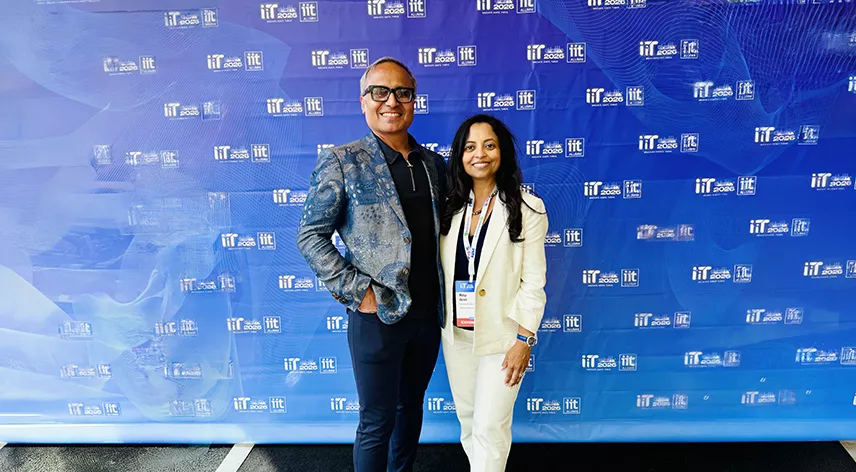
Mid-conference, I had the chance to interview Kulvinder Kaur, founder of Nariva Health. I asked her what keeps her going on hard days. She told me about the strangers she has never met. About the people somewhere in the world, sometimes ten thousand miles away, whose lives might one day be a little better because of the work she is doing now.
"There is a stranger somewhere ten thousand miles away who is no longer a stranger because we have touched their lives. Remembering that is what keeps me going." Kulvinder, Founder, Nariva Health
Then I asked her what she does to care for her mental health. Her answer was practical and grounded. Meditation and yoga, she said, are non-negotiable. Even on the busiest day, she gives herself two minutes in the morning. Just two. The psychology behind it stayed with me. She said, “I am worth two minutes.”
How often do we, as founders, as physicians, as builders, treat ourselves as the last item on our own list? Two hours for a meeting that does not really need us, but not two minutes for ourselves. The moment we tell ourselves we are worth two minutes, we begin to undo the lie that we are valuable only for what we produce. And two minutes is enough to begin. Then it becomes five. Then ten. Then a way of life.
There is a story that this conference does not talk about itself, and it deserves to be told.
Behind every keynote, every meal, every world-class performance, and every seamlessly run session was a village of organizers, staff, and volunteers who had poured themselves into this for over a year. Long before any of us arrived, they were planning. Refining the agenda repeatedly. Building the website. Reviewing every detail. Curating themes. Lining up speakers across continents. Negotiating logistics. Managing expectations. Holding it all together.
The lineup they assembled was extraordinary. Sadhguru on the keynote stage. Ustad Amjad Ali Khan and his sons. Shankar Ehsaan Loy in concert. Gulzarish performing live. Prasanna closing with a fusion of rock guitar and Indian classical that no one had ever heard before. World-class Indian stand-up comedians who had the room in tears of laughter. From Indian classical to comedy to contemporary, all curated with care and delivered with excellence.
They met the demands of high-profile attendees, IIT alumni from around the world, distinguished speakers, and thousands of guests, each with their own needs, schedules, and expectations. They did it with grace. With warmth. With a kind of dedication that does not show up on any program.
Shashi, the conference chair, and the entire team behind him gave more than their time. They gave themselves. Relentlessly, for a year. And what looked effortless to those of us walking through those three days was the result of countless hours, late nights, and small, invisible decisions made by people who cared deeply about getting it right.
This is the part of the story I cannot stop thinking about because it connects everything else. From Ustad Amjad Ali Khan filing his nails between pieces to Shashi guiding a year of preparation. From Shankar Ehsaan Loy giving us their full hearts on stage to a volunteer making sure registration ran smoothly. The same pattern showed up everywhere I looked. People who already had nothing to prove still showed up with their absolute best. Legends, organizers, and volunteers are all rooted in the same value. Excellence is not a moment. It is a posture. It is the choice, made repeatedly, to give what you can give, even when no one would notice if you gave less. That is what made this conference what it was. Not the names on the program. The way every single person on it, from the maestro on stage to the volunteer at the door, brought their full selves to the work.
Some of the most meaningful work at the conference was happening away from the main stage. Anupriya Singh, founder of Heal Us, is building a smart medication dispenser combined with an AI presence that listens through the day, tracks emotional state, and plays music engineered to calm the nervous system at bedtime. It bridges the loneliness between appointments. She has invited me to explore an advisory role, and it is a conversation I am genuinely interested in continuing.
Another founder I met is building a derma tape technology that screens for skin cancer. Quiet, consequential work. The kind of innovation that does not chase headlines but changes lives one patient at a time.
This is the kind of innovation the next era will need. Not technology that replaces the human, but technology that protects, supports, and listens to the human. The future of healthcare will not be machines replacing listening, presence, and care. It will be machines extending it, so that care reaches more people, more often, more deeply.
Over three days, I kept hearing the same answer to different questions. What keeps you going? What makes you a master? What makes the work sustainable? The answer was always inner work. And inner work is not abstract. It is concrete and repeatable. The same practices and traditions have been pointed to for thousands of years and are now validated by every branch of modern science.
THE DAILY FOUNDATIONS Meditation. Breathwork. Yoga. Nutrition. Sleep. Discipline. Consistency. The non-negotiables of becoming whole.
Meditation calms the nervous system and rewires the brain for focus and presence. Breathwork is the fastest tool we have to shift our physiology in real time. Yoga unites body and breath. Nutrition feeds the brain that does our thinking and the gut that holds our emotional intelligence. Sleep is when the body repairs and the mind consolidates. Discipline keeps us doing these things on the days we do not feel like it. Consistency turns them from techniques into a way of being.
We already know these things. We just do not live them consistently, and that is where everything starts to break down. The future does not belong to the people who innovate the hardest. It belongs to the people who become whole and innovate from there.
I came in thinking “Innovate. Ignite. Thrive.” was a sequence of accomplishments. I left understanding it as a single instruction. Become whole. Then build.
The mental health crisis Sadhguru named is not just a clinical problem. It is a civilizational one. The answer is not more output. The answer is more humanity, built one breath, one practice, one consistent day at a time. Built by people who, like the organizers of this conference, choose excellence quietly, repeatedly, because they care.
With deep gratitude to Shashi and the entire team behind IIT 2026. You gave us something rare.