
By Ritu Goel, MD | October 19, 2026 | Blogs | 0 comments
Worrying about artificial intelligence is now a regular topic in therapy offices, and it is not a sign that something is wrong with you. Most of it is a reasonable response to a technology that is changing work, privacy, and daily life faster than anyone can comfortably absorb.
It is still worth understanding. Concern is useful when it moves you to learn, plan, or speak up. It starts to cost you when it follows you into your sleep, your focus, and your relationships. This post covers what clinicians are noticing, how to tell ordinary worry from a mental health concern, what looks different in children and teens, and what helps.
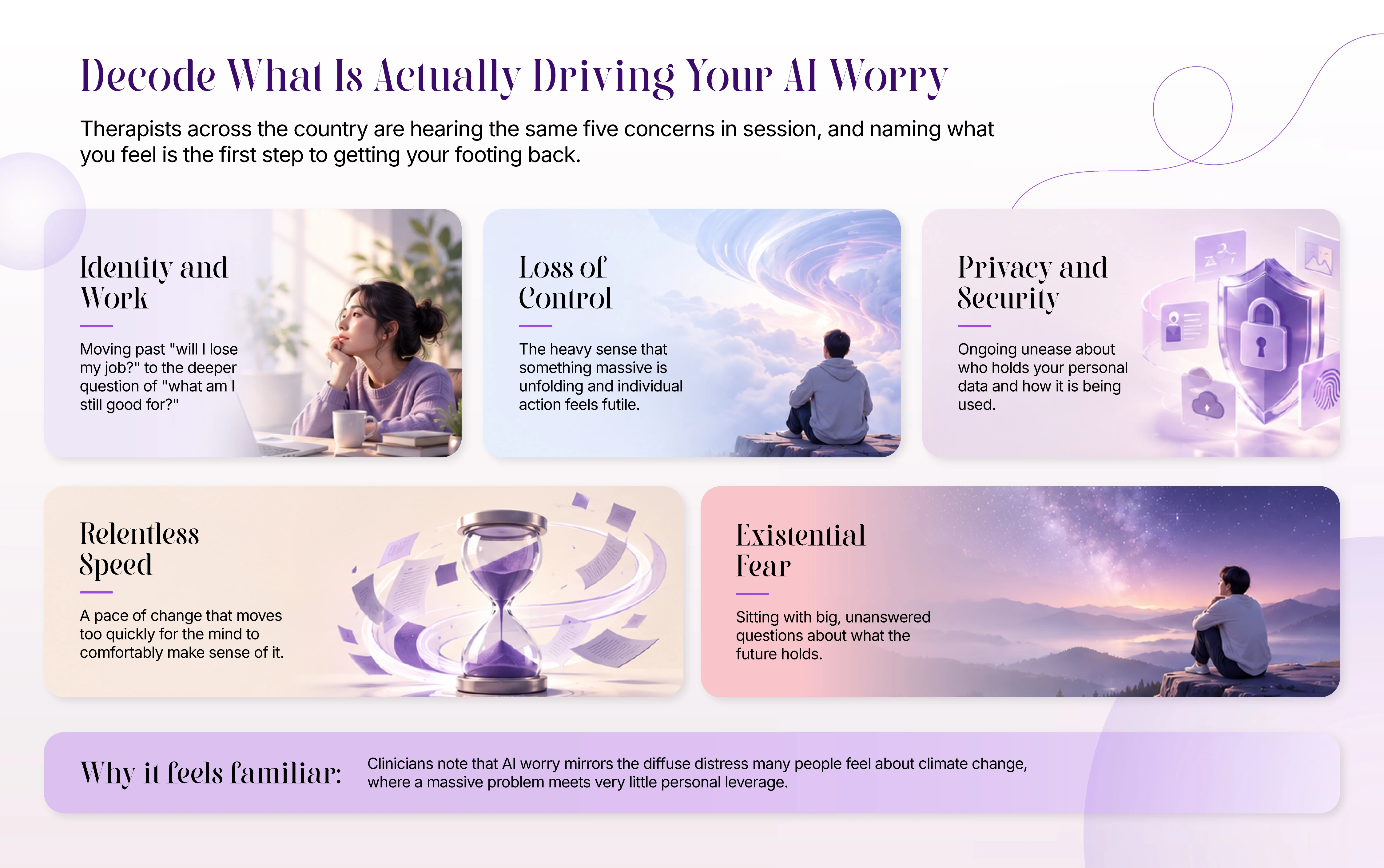
A recent New York Times report describes therapists across the US fielding a growing number of AI-related concerns. The themes are consistent:
The article also cites Pew Research Center survey work showing that many Americans are skeptical of AI and feel it is advancing too fast. The clinicians quoted draw a parallel to the diffuse distress many people feel about climate change: a large problem, little personal leverage.
"AI anxiety" is not a diagnosis. I would be cautious about any framing that turns a proportionate reaction into a disorder. The more useful question is what worry is doing to your life.
Proportionate concern tends to look like this: you think about it, you read, you adjust, and then you put it down and get on with your day.
It deserves attention when it looks more like this:
People who already live with generalized anxiety or OCD can find this harder. Rumination feels protective, as if thinking about it one more time will keep you safe. It does not, and the cycle tends to tighten. If you recognize this pattern, it is treatable, and treatment works on the cycle of rumination itself, whatever its subject.
AI-related distress can also sit alongside, or worsen, depression, panic, and sleep problems. Fear about the future is a common theme in depression too, so a lasting change in mood, energy, or interest in things you usually enjoy matters as much as the worry itself.
Two groups stand out in the reporting.
Professionals whose work is changing. When a task you trained for years to do is handed to software, the loss reaches past the practical into identity and meaning. Some people describe losing the most interesting part of their job. That is grief as much as anxiety, and it helps to name it that way.
Parents. Many worry that AI will erode their children's critical thinking. Parents carry the added weight of making decisions for someone else with incomplete information. For families, the most protective steps are usually practical: clear household rules about technology, curiosity about how children use it, and open conversation instead of surveillance.
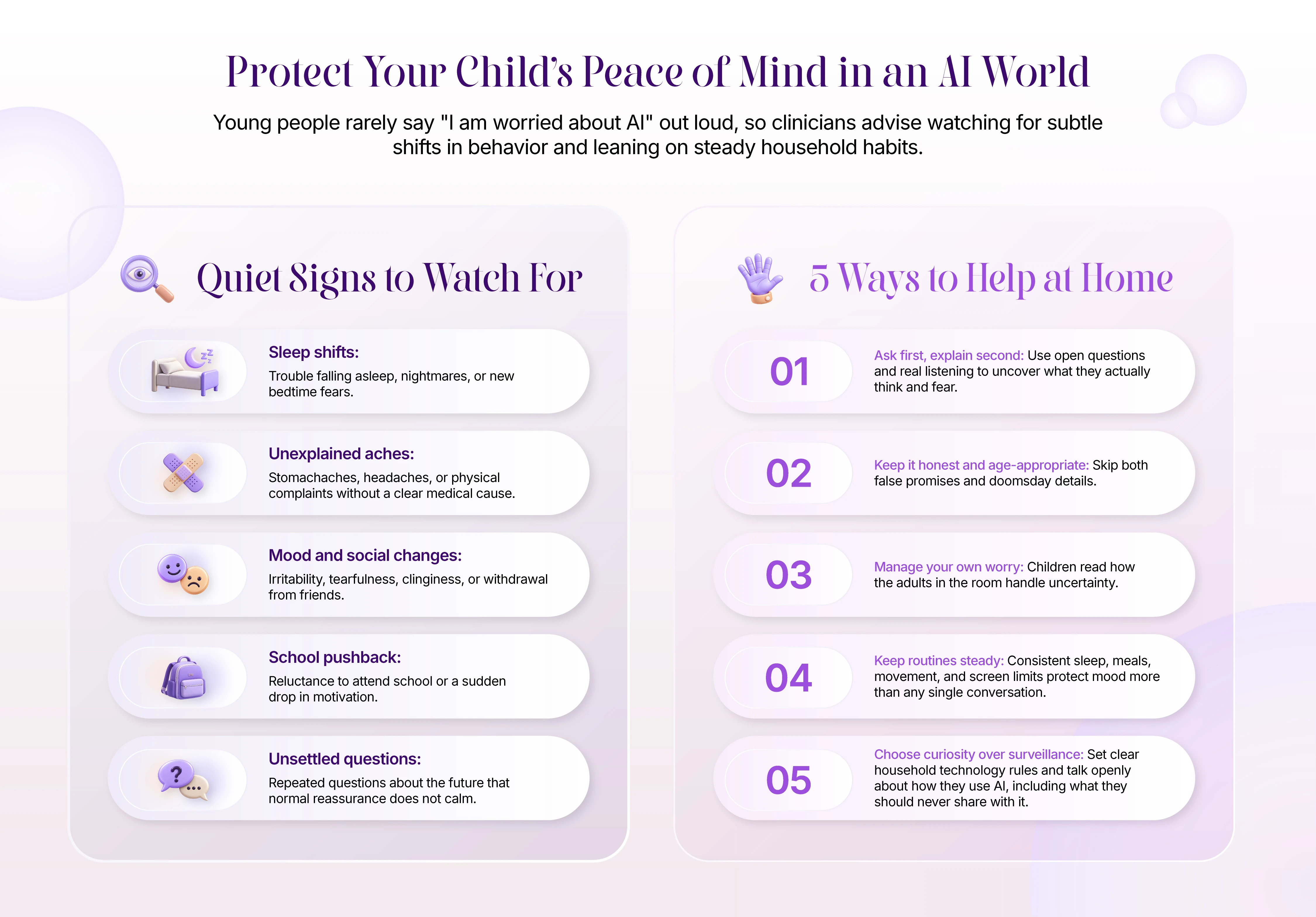
Young people hear about AI from school, friends, and social media, often without the context adults have. Some are curious or excited. Others absorb the worry around them, or quietly fret about their future, their schoolwork, or fake and manipulated images of people they know. Children and teens who already struggle with anxiety, OCD, or depression may be more vulnerable.
Young people rarely say, "I am worried about AI." Look for changes instead:
What helps at home:
There is no single fix, but these are reasonable places to start.
Consider speaking with a mental health professional if worry about AI, or anything else, is:
For children and teens, a sudden drop in school performance, withdrawal from friends, school refusal, or new physical complaints are also reasons to call their pediatrician or a child and adolescent mental health professional.
If you are in crisis or having thoughts of harming yourself, call, or text 988 (the Suicide and Crisis Lifeline in the US) or go to the nearest emergency room.
An evaluation is a way to get a clear picture of what is driving the distress and which options fit. At MindClaire, I take an integrative approach that looks at the whole person. If you want to talk, you can schedule a consultation.
This post is for general education and is not medical advice or a substitute for individual evaluation.